


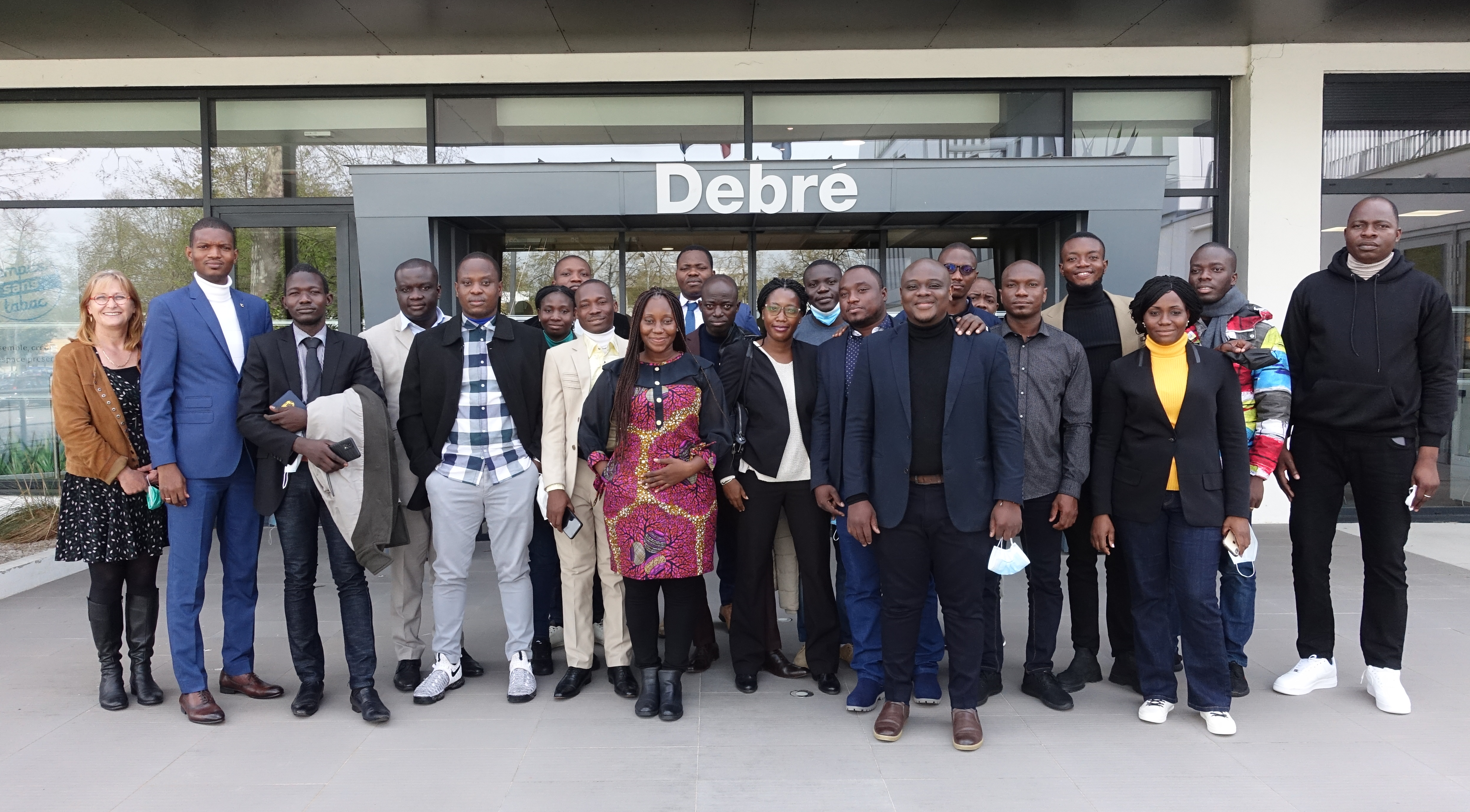
Groupe de médecins béninois devant l’entrée principale de l’EHESP à Rennes le 11 avril 2022 – Photo : EHESP
Dans le cadre de la refonte de la gouvernance de ses hôpitaux publics, le Ministère de la santé du Bénin a sollicité l’EHESP pour devenir partenaire académique dans la formation de ses futurs directeurs d’hôpital. Sous la coordination pédagogique de l’Université d’Abomey-Calavi, l’EHESP se joint à l’Institut régional de santé publique (IRSP) et à l’École nationale d’administration et de magistrature (ENAM) au Bénin, pour assurer la formation de 21 médecins béninois au sein d’un master sur 2 ans (2022-2023).
Le lundi 11 avril 2022, après avoir suivi 3 mois d’enseignements à l’Université Abomey-Calavi et des modules e-learning conçus par l’EHESP, ce groupe de médecins est accueilli sur le site rennais de l’EHESP pour débuter une formation de 8 mois en management des hôpitaux. Outre la délivrance de cours en présentiel et à distance au sein de ce master, l’École permet également à ces médecins d’effectuer deux stages de découverte et de direction d’une durée totale de 10 semaines dans des hôpitaux et des établissements médico-sociaux français. En décembre 2023, les médecins ayant validé ce cursus se verront délivrer le diplôme de master par l’Université d’Abomey-Calavi.